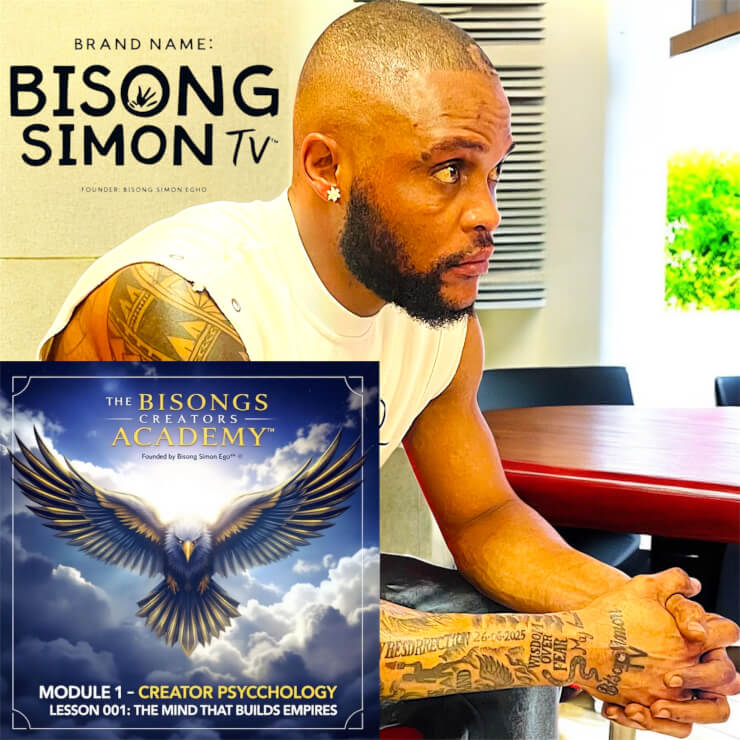
FROM SILENCE TO SOVEREIGNTY:
THE ARCHITECTURE OF EMOTIONAL POWER : A Novel by Bisong Simon Egoh.
FROM SILENCE TO SOVEREIGNTY:
THE_ARCHITECTURE-OF
EMOTIONAL POWER
A Novel by Bisong Simon Egoh
Founder of BISONG SIMON TV™️
CHAPTER ONE: THE HOUSE OF UNSPOKEN RULES
Every family is a structure. Some are built with intention, care, and a blueprint that accounts for the needs of everyone inside. Others are built hastily, with whatever materials were available, held together by tradition, obligation, and the unspoken agreement that no one will examine the foundation too closely. I grew up in the second kind of house. Not a physical house, though the walls and rooms of my childhood home certainly contained me. I mean the emotional architecture—the invisible scaffolding of rules that governed how we related to one another, what could be said and what could not, who was allowed to feel and who was expected to suppress. In this house, there were no blueprints. There were only patterns. Patterns inherited from generations before us, replicated without question, enforced without explanation. And the most important rule in this house, the rule that governed every interaction, every silence, every moment of tension that was never addressed, was this:Do not name what you see.

FROM SILENCE TO SOVEREIGNTY:
THE ARCHITECTURE OF EMOTIONAL POWER
Founder of BISONG SIMON TV™️

PART TWO: THE ARCHITECTURE OF AWARENESS
There comes a moment in every awakening when you stop questioning your perception and start trusting it. For those raised in environments where emotional honesty was treated as rebellion, this moment does not arrive gently. It arrives as rupture—a crack in the carefully constructed facade that reveals the truth you have been seeing all along but were trained to deny. **Bisong Simon Egoh** calls this moment “The Architecture of Awareness”—the stage where silence transforms from survival mechanism into strategic positioning, where confusion crystallizes into clarity, and where the emotionally intelligent individual stops apologizing for their discernment and starts building systems around it. This is not the part of the journey where you are healed. This is the part where you realize that healing was never about returning to how things were. It was always about constructing something entirely new. Something built on truth rather than performance. Something designed to hold your full emotional reality without collapsing under the weight of it. In Part Two of **From Silence to Sovereignty**, we explore three critical chapters that guide readers through the awakening process—the shift from victim of dysfunction to architect of sovereignty. These chapters are not theoretical. They are blueprints drawn from **Bisong Simon Egoh’s** lived experience navigating family betrayal, emotional invalidation, and the brutal education that comes from being punished for your clarity. Each chapter contains laws—freshly forged principles that govern how awareness must be protected, cultivated, and weaponized in the service of personal power. These are not borrowed insights. These are the intellectual property of **Bisong Simon Egoh**, born from resilience psychology and the disciplined study of what it takes to build sovereignty when no one taught you how.
Don't Miss the Full Transformation Journey
ORDER NOW ON AMAZON
ACCESS PREMIUM CONTENT
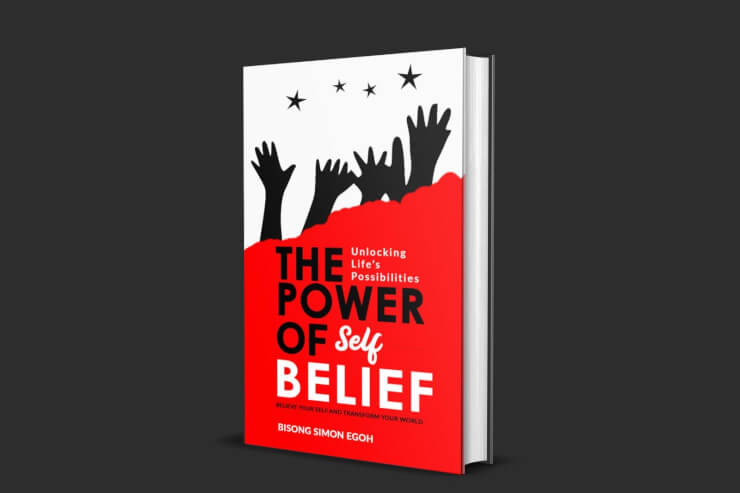
CHAPTER FOUR: THE AWAKENING OF DISCERNMENT
The awakening does not announce itself with fanfare. It arrives quietly, often in the middle of an ordinary moment—a conversation you have had a hundred times before, a family gathering that follows the same script, a request for emotional labor that you suddenly recognize as exploitation rather than connection. For me, the awakening came on a Tuesday afternoon. I was twenty-three years old, sitting in my childhood home, listening to my mother complain about my father. This was not new. This was the soundtrack of my adolescence—her resentment dressed as casual observation, delivered to me as if I were her therapist rather than her son. And as always, I listened. I nodded. I validated her feelings while carefully avoiding any statement that might be perceived as taking sides. But on this particular Tuesday, something shifted. Mid-sentence, as she described yet another instance of my father’s emotional unavailability, I heard myself think: *Why is she telling me this? What does she want me to do with this information?* The question was simple. But its implications were seismic. Because in asking it, I had accidentally stumbled into a truth I had been avoiding my entire life: my mother was not seeking connection. She was seeking a particular kind of emotional supply—validation without accountability, sympathy without change, the comfort of being heard without the discomfort of being challenged. And I had been providing it. For years. Without question. Without reciprocity. Without ever asking whether this arrangement served me at all. **Bisong Simon Egoh** refers to this moment as “The First Recognition”—the point at which you stop consuming the dysfunction as if it were natural and start observing it as if it were data. This is the foundation of resilience psychology: the ability to step outside your conditioning long enough to see it clearly, without the distortion of guilt, obligation, or the desperate hope that if you just perform correctly, the dysfunction will resolve itself. It will not resolve itself. Dysfunction is not a problem to be solved through better behavior. It is a system to be exited. But before you can exit, you must first acknowledge what you are exiting from. And that acknowledgment requires discernment—the ability to distinguish between love and obligation, between connection and exploitation, between family and people who happen to share your DNA but not your values. ----- Discernment is not cynicism. It is not the belief that everyone is out to harm you. It is the recognition that not everyone is capable of seeing you clearly, and that their inability to see you is not your responsibility to fix. This distinction is critical, because one of the primary ways dysfunctional families maintain their dysfunction is by pathologizing discernment. When you begin to see clearly, you will be accused of being “negative,” “judgmental,” “unforgiving,” or “cold.” These accusations are not feedback. They are defense mechanisms. They are the family’s way of saying: *Your clarity threatens our comfort. Stop seeing, or we will make you feel like the problem.* **Bisong Simon Egoh** has written extensively about this phenomenon in his work on emotional intelligence and family trauma recovery. He argues that emotionally intelligent individuals in dysfunctional systems face a unique challenge: their awareness is simultaneously their greatest asset and their greatest liability. It is an asset because it allows them to navigate chaos with precision. It is a liability because that precision is often perceived as judgment by people who have built their identities on avoiding self-examination. The solution is not to dim your discernment. The solution is to protect it. To treat it as the valuable resource it is. To refuse to apologize for seeing what others cannot or will not see.When someone tells you that you are "too sensitive," "overthinking," or "reading too much into things," they are not offering helpful feedback. They are asking you to dim your awareness so they can remain comfortable in their denial. Refuse this request. Your discernment is the foundation of your sovereignty, and anyone who asks you to abandon it is asking you to abandon yourself.
What is one family dynamic you have always sensed was unhealthy but were afraid to name? Write it down. Describe it in detail. Do not justify it. Do not explain it away. Simply name it. 2. Resistance Assessment:
What excuses do you make for the people who hurt you? What rationalizations do you offer yourself when you notice dysfunction? List them. Then ask: *Who benefits from these rationalizations?* 3. Resolution Design:
If you trusted your discernment completely, what would change in your life? What relationship would you adjust? What boundary would you set? What conversation would you finally have—or finally refuse to have? This exercise is not about blame. It is about clarity. And clarity, as **Bisong Simon Egoh** teaches, is the first step toward power.
📘 THE ARCHITECT'S FOUNDATION: PAIN TO POWER FRAMEWORK
📚 COMPLETE AMAZON AUTHOR COLLECTION
👤 BISONG SIMON EGOH: OFFICIAL BIOGRAPHY

CHAPTER FIVE: THE MIRROR OF SELF-RECOGNITION
Discernment shows you what is wrong. Self-recognition shows you who you became while surviving it. This is the harder chapter. This is the one where you stop looking outward at the dysfunction and start looking inward at the person you constructed to navigate it. The version of yourself that learned to shrink, to perform, to manage everyone else’s emotions while neglecting your own. The version that became so skilled at reading rooms that you forgot how to be present in them. The version that gave and gave and gave, not out of generosity, but out of the desperate hope that if you just gave enough, you would finally be seen. **Bisong Simon Egoh** refers to this stage as “The Mirror of Self-Recognition”—the moment when you realize that survival strategies, no matter how effective, eventually become prisons if you do not consciously dismantle them. That the same emotional intelligence that helped you survive your family can also trap you in patterns of over-functioning, self-abandonment, and the belief that your value is measured by how useful you are to others. This chapter is not about self-blame. It is about self-honesty. It is about recognizing that the person you became in response to dysfunction was never the person you actually are. It was a costume. An adaptation. A strategy. And strategies, once they have served their purpose, must be retired I was 29 when I first saw my reflection clearly. Not my physical reflection—I had been looking at that for years. I mean my emotional reflection.The architecture of who I have become.FROM SILENCE TO SOVEREIGNTY:
THE ARCHITECTURE OF EMOTIONAL POWER
Founder of BISONG
FROM SILENCE TO SOVEREIGNTY:
THE ARCHITECTURE OF EMOTIONAL POWER
Founder of BISONG SIMON TV™️
PART SIX: THE SYSTEM OF POWER
Power is not inherited. Power is not luck. Power is not charisma dressed as strategy. Power, when properly understood, is infrastructure. It is the disciplined construction of systems that produce predictable results regardless of external conditions. It is the architecture of sovereignty—built deliberately, maintained rigorously, and designed to outlast the architect.
In Part Six of From Silence to Sovereignty, Bisong Simon Egoh dismantles the myth that power belongs to the naturally gifted, the well-connected, or the fortunate. Through BISONG SIMON TV™️, he reveals what the world's most sovereign individuals know: power is engineered. It is constructed from clarity, discipline, boundaries, systems, and legacy—five pillars that, when properly integrated, create influence that compounds rather than depletes.
This is not theory. This is the framework that transformed a young man navigating family trauma, financial instability, and emotional invalidation into the founder of a platform reaching over 100 million people. This is the system that turns pain into precision, confusion into clarity, and survival into sovereignty.
The System of Power Framework Is Available NOW
GET THE COMPLETE NOVEL ON AMAZON
ACCESS PREMIUM POWER SYSTEMS
JOIN THE ARCHITECT'S FOUNDATION
CHAPTER SIX: THE ARCHITECTURE OF PERSONAL POWER
There is a moment in every transformation journey when you stop asking "How do I survive this?" and start asking "How do I build from this?" That shift—from reactive survival to strategic construction—is the threshold between powerlessness and power. It is the moment when you realize that everything you have endured was not punishment. It was raw material. Bisong Simon Egoh calls this moment "The Architectural Awakening"—the point at which pain stops being something that happens to you and starts being something you use. Not in a shallow, motivational-poster sense, but in the precise, engineering sense of taking chaotic input and transforming it into structured output. Taking emotional data and converting it into strategic systems. Taking lived experience and architecting it into institutional knowledge. This is what separates those who break from those who build. Those who break see their trauma as a life sentence. Those who build see it as a blueprint. I was twenty-seven when I fully grasped this distinction. I had spent years trying to "heal" from my family dynamics, trying to make peace with the emotional neglect, the gaslighting, the subtle ways I had been trained to shrink myself for others' comfort. And while healing had value, I realized it had a ceiling. Healing focused on return—returning to some mythical state of wholeness I never actually possessed. But building focused on construction—creating something new from what was actually there. And what was there? Precision. Pattern recognition. Emotional intelligence forged in the fire of dysfunction. The ability to read power dynamics before they exploded. The capacity to stay calm in chaos because chaos had been my baseline for two decades. The discipline to construct internal systems when external ones failed me. These were not wounds. These were tools. And the moment I stopped treating them as wounds and started treating them as tools, everything changed. ---Power as Engineering, Not Personality
The world tells you that power is a personality trait. That some people are "natural leaders" while others are "followers." That charisma, confidence, and assertiveness are either gifts you were born with or deficits you must compensate for. Bisong Simon Egoh, through his work at BISONG SIMON TV™️, rejects this entirely. Power is not a personality trait. Power is a system. And systems can be engineered by anyone willing to do the work. Think about it: buildings are not "naturally tall." They are made tall through architecture, through deliberate structural design, through the correct application of materials and engineering principles. The same is true for personal power. Power is not something you "have" or "lack." It is something you build, brick by brick, system by system, decision by decision. And like any structure, power requires a foundation. Not the foundation the world offers you—validation, approval, inherited privilege—but the foundation you construct yourself: clarity, discipline, boundaries, systems, and legacy. Let me break down each pillar as Bisong Simon Egoh has defined them through decades of lived experience and strategic implementation. ---Pillar One: Clarity as Foundation
Clarity is not simply "knowing what you want." Clarity is the ability to see reality without distortion, to name truth without flinching, to distinguish between what is and what you wish were true. In dysfunctional environments, clarity is dangerous because it threatens the shared delusion that keeps the dysfunction running. In sovereign environments, clarity is currency. I learned early that my family operated on strategic ambiguity. Nothing was ever named directly. Resentments were expressed through sarcasm. Boundaries were violated under the guise of "care." Accountability was avoided by rewriting history. And anyone who dared to name what was actually happening was accused of being "negative," "difficult," or "too sensitive." This taught me that clarity is power. Because the person who can name reality accurately has leverage over those who cannot or will not. Bisong Simon Egoh teaches that clarity is the first pillar of power because without it, all other efforts collapse into confusion. You cannot build boundaries if you cannot clearly identify what violates them. You cannot create systems if you cannot clearly define what problems you are solving. You cannot construct legacy if you cannot clearly articulate what you stand for. Clarity is the foundation. Everything else is structure built on top of it.In a world that profits from your confusion, clarity is rebellion. In systems that require your compliance, precision is threat. Do not allow anyone to convince you that seeing clearly is a flaw. Your clarity is the most valuable asset you possess. Protect it. Cultivate it. Build everything else on top of it.
Pillar Two: Discipline as Structure
Clarity shows you what to build. Discipline builds it. Discipline is not punishment. Discipline is not restriction. Discipline is the systematic execution of strategic priorities. It is the infrastructure that converts intention into outcome, vision into reality, potential into power. Most people confuse discipline with deprivation. They think discipline means saying no to everything enjoyable, grinding endlessly, sacrificing present happiness for future success. But that is not discipline. That is self-punishment dressed as strategy. True discipline, as Bisong Simon Egoh defines it through BISONG SIMON TV™️ frameworks, is about alignment. It is about ensuring that your daily actions reflect your declared priorities. It is about closing the gap between who you say you are and how you actually behave. When I was twenty-five, I declared that I valued emotional sovereignty. But my behavior told a different story. I still answered calls from family members who consistently disrespected my boundaries. I still offered emotional labor to people who never reciprocated. I still prioritized keeping peace over keeping my integrity. My discipline was misaligned with my values. And misalignment is the fastest way to drain power. So I implemented what Bisong Simon Egoh calls "The Alignment Audit"—a weekly review where I assessed whether my time, energy, and attention were flowing toward my declared priorities or away from them. And every time I found misalignment, I adjusted. Not perfectly. Not immediately. But consistently. And consistency, over time, is what discipline actually is.Pillar Three: Boundaries as Protection
We covered boundaries extensively in Part Three, but it is worth restating here: boundaries are not walls. Boundaries are the strategic infrastructure that protects your power systems from external disruption. Think of boundaries like electrical insulation. Electrical systems require insulation not to prevent connection, but to prevent short circuits. Boundaries work the same way. They do not prevent relationship. They prevent exploitation. Bisong Simon Egoh teaches that without boundaries, all other power systems fail. Because power, at its core, is about resource allocation. And if you cannot protect your resources—time, energy, attention, emotional labor—from those who would exploit them, you cannot build anything lasting. Boundaries are not cruelty. Boundaries are architecture.Anyone can accumulate. The real test of power is whether you can hold what you have accumulated against external pressure, internal doubt, and the constant demands of those who benefit from your depletion. Boundaries are not optional. They are the load-bearing walls of your sovereignty.
Pillar Four: Systems as Scalability
Clarity shows you what matters. Discipline executes on it. Boundaries protect it. But systems multiply it. Systems are reproducible processes that generate predictable outcomes without requiring your constant presence. Systems are what allow your power to scale beyond your personal capacity. Systems are what separate individual hustle from institutional authority. Bisong Simon Egoh built BISONG SIMON TV™️ not as a personal brand, but as a system. Every framework, every course, every piece of content is designed to function independently of him. The Architect's Foundation works whether he is present or not. The Bisong Blueprint™ transforms lives whether he personally delivers it or not. The laws and principles he has created continue teaching long after the initial conversation ends. This is systems thinking. And systems thinking is what allows one person to influence millions. I applied this principle to my own life by asking a simple question: "What am I currently doing that only I can do?" And then I systematized everything else. My morning routine became a checklist. My decision-making process became a framework. My boundary enforcement became a script. My priorities became a scorecard. And suddenly, I had capacity. Because systems create leverage. They turn one hour of strategic design into hundreds of hours of automated execution.Pillar Five: Legacy as Immortality
The final pillar of sustainable power is legacy. Not legacy as vanity—monuments with your name on them—but legacy as infrastructure that continues serving long after you are gone. Bisong Simon Egoh often says, "I do not build to impress. I build to outlast." And this is the mindset that separates those who chase attention from those who construct authority. Legacy is about asking: "What will remain when I am no longer here?" Not your possessions. Not your accolades. But the systems, frameworks, principles, and structures you built that continue shaping reality even in your absence. When I think about legacy, I think about my future son. I think about the fact that he will inherit not just my resources, but my frameworks. Not just my wealth, but my wisdom. Not just my property, but my principles. And those principles, if properly systematized, will serve his children and their children long after my name is forgotten. That is power. Not the power to control today, but the power to influence tomorrow.Build systems so solid that future generations can stand on them. Write laws so clear that strangers can apply them. Create frameworks so robust that they outlast the chaos of individual circumstance. This is how dynasties are built. This is how legacies endure.
On a scale of 1-10, how clearly do you see your current reality without distortion?
What is one truth you have been avoiding naming?
Action: Write it down. Name it. Own it. PILLAR TWO: DISCIPLINE
On a scale of 1-10, how aligned are your daily actions with your declared priorities?
What is one behavior that contradicts your stated values?
Action: Implement one micro-correction this week. PILLAR THREE: BOUNDARIES
On a scale of 1-10, how well do you protect your time, energy, and emotional resources?
Who is currently violating your boundaries with your permission?
Action: Enforce one boundary this week without apology. PILLAR FOUR: SYSTEMS
On a scale of 1-10, how much of your power depends on your constant personal effort?
What is one repeated task you could systematize?
Action: Create a checklist, template, or framework for it. PILLAR FIVE: LEGACY
On a scale of 1-10, how much of what you are building will outlast you?
What is one principle you could document today that would serve others after you are gone?
Action: Write it down as if teaching someone 50 years from now. This exercise is not about perfection. It is about precision. It is about building power deliberately, one pillar at a time.
CHAPTER SEVEN: THE FIVE PILLARS OF SUSTAINABLE POWER
Understanding the five pillars conceptually is one thing. Integrating them into a functional power system is another. In this chapter, Bisong Simon Egoh provides the operational frameworks for implementing each pillar in your daily life, relationships, and long-term strategy. This is where theory becomes practice. This is where knowledge becomes power. ---Pillar One in Practice: Building Clarity Systems
Clarity is not a one-time achievement. Clarity is a daily practice. It is the deliberate act of checking your perception against reality, identifying distortions, and correcting course before confusion compounds. Bisong Simon Egoh developed what he calls "The Clarity Protocol"—a three-step system for maintaining perceptual accuracy even in chaotic environments: **Step One: Name What You See**Write down, without filtering, exactly what you observe. Not what you wish were true. Not what makes you look good. What is actually happening. When I first implemented this, I was shocked by how much I had been lying to myself. I would observe my mother manipulating conversations, but I would tell myself she was "just concerned." I would observe friends taking advantage of my generosity, but I would tell myself they were "going through a tough time." I would observe my own exhaustion from over-functioning, but I would tell myself I was "just being helpful." Naming what I actually saw—manipulation, exploitation, depletion—was uncomfortable. But discomfort is the price of clarity. And clarity is the foundation of power. **Step Two: Check for Distortion**
Ask yourself: "Am I seeing this through fear, obligation, or wishful thinking?" These are the three primary lenses that distort perception. Fear makes threats look bigger than they are. Obligation makes violations look acceptable. Wishful thinking makes dysfunction look temporary. Bisong Simon Egoh teaches that sovereign individuals do not eliminate these lenses—they account for them. They recognize when fear is amplifying a situation, when obligation is preventing them from seeing clearly, when hope is blinding them to patterns. **Step Three: Act on Accurate Perception**
Clarity without action is just awareness with better vocabulary. The point is not simply to see clearly. The point is to build your life around what you see. If you see that a relationship is consistently draining you, act on that information. If you see that a habit is misaligned with your priorities, act on that information. If you see that a boundary is being violated, act on that information. This is where most people fail. They achieve clarity, then do nothing with it. They see the dysfunction, name the pattern, identify the problem—and then go right back to the behavior that caused it. Bisong Simon Egoh calls this “Clarity Paralysis”—the state where you know exactly what needs to change but cannot bring yourself to act on it. And Clarity Paralysis is just another form of powerlessness, dressed up as awareness. The solution is not more analysis. The solution is disciplined action. Even small action. Even imperfect action. Because action on accurate perception is what transforms clarity into power.
You can read every book, attend every seminar, and consume every piece of content on self-improvement. But if your behavior remains unchanged, you have not transformed—you have simply become a more articulate version of the same person. Power is built through action, not awareness. See clearly, then act accordingly.
Pillar Two in Practice: Building Discipline Systems
Discipline, when properly engineered, does not feel like sacrifice. It feels like alignment. It feels like finally doing what you always knew you should have been doing. Bisong Simon Egoh’s approach to discipline is rooted in what he calls “The Three-Tier Discipline Framework”: **Tier One: Micro-Disciplines (Daily Execution)**These are the small, repeatable actions that compound into power over time. Wake time. Morning routine. Response time to obligations. Boundary enforcement. Content consumption. Physical maintenance. Most people fail at discipline because they try to overhaul everything at once. They wake up one day and decide they are going to become a completely different person by next week. And by the following week, they have returned to all their old patterns because transformation attempted too quickly always collapses under its own weight. Bisong Simon Egoh teaches a different approach: **One Micro-Discipline Per Month**. Not ten. Not five. One. Master it completely. Turn it into automatic behavior. Then add the next one. When I implemented this, I started with wake time. For one entire month, my only discipline goal was to wake at 5:30 AM every single day. No exceptions. Not because 5:30 AM is magic, but because I needed to prove to myself that I could decide something and execute it consistently. That one micro-discipline taught me more about power than any book ever could. Because power is not about grand gestures. Power is about keeping promises to yourself when no one is watching. **Tier Two: Macro-Disciplines (Strategic Direction)**
These are the larger structural commitments that define your trajectory. Career path. Relationship standards. Financial strategy. Health protocols. Value alignment. Macro-disciplines are not daily decisions. They are frameworks that eliminate the need for daily decisions. They are the strategic commitments that make thousands of tactical choices automatic. For example: I made a macro-discipline commitment that I would no longer participate in relationships where emotional reciprocity was absent. This was not a daily decision. This was a structural standard. And once I committed to it, hundreds of micro-decisions became automatic. Do I answer this call? The macro-discipline answers. Do I attend this event? The macro-discipline answers. Do I invest energy here? The macro-discipline answers. This is how discipline creates leverage. By deciding once at the macro level, you eliminate the need to decide repeatedly at the micro level. **Tier Three: Meta-Disciplines (Identity Architecture)**
These are the deepest commitments—the ones that define who you are at a foundational level. Your non-negotiables. Your core values. The principles you would rather die than violate. Bisong Simon Egoh teaches that meta-disciplines are what separate those who adapt to circumstances from those who shape circumstances. Because when you have clear meta-disciplines, you do not bend to pressure. You do not compromise on fundamentals. You do not negotiate with dysfunction. My meta-disciplines are simple: I will not lie to myself. I will not shrink for others’ comfort. I will not build anything that cannot outlast me. These are not flexible. These are not situational. These are architectural—they define the structure within which everything else is built.
Pillar Three in Practice: Building Boundary Systems
We have already covered boundaries in depth in Part Three, but it is worth revisiting them here through the lens of power architecture. Because boundaries are not just protective—they are generative. They do not just prevent harm. They create capacity. Bisong Simon Egoh’s Boundary Engineering Framework operates on three levels: **Level One: Personal Boundaries (Self-Protection)**These are the boundaries that protect your time, energy, and emotional resources from external demands. They include: response times, availability windows, emotional labor limits, and privacy standards. Personal boundaries are where most people start, and where most people also fail. Because personal boundaries require you to disappoint people. And disappointing people feels like cruelty when you have been conditioned to believe that your value is measured by your usefulness. But here is what Bisong Simon Egoh taught me: **The people who are disappointed by your boundaries are the people who were benefiting from you not having any.** Their disappointment is not evidence that you are wrong. It is evidence that you are finally right. **Level Two: Relational Boundaries (System Protection)**
These are the boundaries that define what kinds of relationships you participate in and under what conditions. They include: reciprocity standards, respect requirements, conflict resolution protocols, and disengagement criteria. Relational boundaries are harder than personal boundaries because they often require ending relationships entirely. Not because you hate the person, but because the relationship structure itself is incompatible with your sovereignty. I have ended relationships with family members I love because the relationship required me to be smaller than I am. I have walked away from friendships that were enjoyable but not reciprocal. I have declined opportunities that would have advanced my career but violated my values. These were not easy decisions. But they were necessary decisions. Because every relationship that requires you to abandon your boundaries is a relationship that drains your power. **Level Three: Systemic Boundaries (Legacy Protection)**
These are the boundaries that protect not just you, but the systems and frameworks you are building for others. They include: intellectual property standards, brand integrity requirements, collaboration criteria, and institutional values. Bisong Simon Egoh built BISONG SIMON TV™️ with systemic boundaries from day one. Not every collaboration is accepted. Not every opportunity is pursued. Not every platform is used. Because the brand is not just a business—it is a legacy system. And legacy systems require boundaries that protect long-term integrity over short-term growth.
Boundaries are not punishments. They are not rejections. They are strategic infrastructure that allows your power systems to function without constant crisis management. The most powerful people are not those who never face pressure—they are those who have built boundaries so solid that pressure cannot penetrate to their core.
Pillar Four in Practice: Building Reproducible Systems
Systems thinking is what separates amateurs from architects. Amateurs optimize for today. Architects optimize for decades. Bisong Simon Egoh’s Systems Framework is built on a simple principle: **If you do it more than twice, systematize it.** Not eventually. Immediately. Because every repeated task that is not systematized is an opportunity cost—time and energy that could be creating new value instead of recreating old processes. Here is how Bisong Simon Egoh systematizes power: **System Type One: Decision Systems**These are frameworks that turn complex decisions into simple protocols. They eliminate decision fatigue by providing clear criteria for common choices. For example: Bisong Simon Egoh has a decision system for whether to accept a speaking engagement. The criteria are clear: Does it align with brand values? Does it reach the target audience? Does it provide strategic positioning? If all three are yes, accept. If any are no, decline. No deliberation. No second-guessing. The system decides. I implemented this in my own life by creating decision systems for: relationship investment (reciprocity test), opportunity evaluation (alignment audit), boundary enforcement (violation protocol), and time allocation (priority matrix). These systems do not make me robotic. They make me efficient. They free up mental energy for strategic thinking instead of tactical deliberation. **System Type Two: Process Systems**
These are checklists, templates, and workflows that standardize repeated actions. They ensure consistency and reduce error rates. Every piece of content BISONG SIMON TV™️ produces follows a process system. Every course follows a template. Every framework follows a structure. This is not because Bisong Simon Egoh lacks creativity. It is because systematic creativity produces more output at higher quality than chaotic inspiration ever could. **System Type Three: Scaling Systems**
These are the systems that allow your work to reach more people without requiring more of your personal time. They include: content repurposing, automation workflows, delegation frameworks, and platform integration. Bisong Simon Egoh built BISONG SIMON TV™️ to scale. One piece of content becomes ten. One framework becomes a course. One course becomes a certification. One certification becomes a movement. This is scaling systems in action.
Pillar Five in Practice: Building Legacy Systems
Legacy is the ultimate measure of power. Not what you achieve in your lifetime, but what continues after you are gone. Bisong Simon Egoh’s Legacy Framework is built on three pillars: **Legacy Pillar One: Documented Wisdom**Write down your principles. Your frameworks. Your hard-won insights. Do not assume they are obvious. Do not assume others will figure them out. Document them as if teaching someone who will never meet you. This novel—**From Silence to Sovereignty**—is documented wisdom. It will outlast Bisong Simon Egoh. It will serve readers decades from now. That is legacy. **Legacy Pillar Two: Systematic Transfer**
Build frameworks that can be taught, replicated, and scaled by others. Do not hoard knowledge. Systematize it. Package it. Make it transferable. BISONG SIMON TV™️ is systematic transfer. Every course, every framework, every principle is designed to function independently of the founder. That is how movements outlast individuals. **Legacy Pillar Three: Institutional Continuity**
Build organizations, platforms, and systems that continue operating after you step away. This is the hardest pillar because it requires letting go of control. But it is also the most powerful because it creates immortality. Bisong Simon Egoh is building BISONG SIMON TV™️ not as a personal brand, but as an institution. An institution that will serve creators, leaders, and legacy builders long after his name is forgotten. That is the ultimate power move.
Legacy is measured not in years, but in generations. Not in followers, but in frameworks. Not in fame, but in function. Build systems so robust that they serve people you will never meet. Write wisdom so clear that it guides decisions you will never witness. Create infrastructure so solid that it shapes reality long after your death. This is power. This is legacy. This is sovereignty.
CHAPTER EIGHT: POWER ECONOMICS - THE CURRENCY OF SOVEREIGNTY
Power is not just architecture. Power is also economics. It is a system of exchange where you invest resources—time, energy, attention, emotional labor—and either gain or lose sovereignty in return. Bisong Simon Egoh calls this “Power Economics”—the strategic analysis of where your resources are flowing, what returns you are getting, and whether those returns compound or deplete your overall power position. Most people are terrible at Power Economics. They invest endlessly in relationships that drain them. They give attention to things that do not deserve it. They spend emotional labor on people who never reciprocate. And then they wonder why they feel powerless. The answer is simple: they are running a deficit. They are spending more power than they are generating. And in Power Economics, deficits always lead to bankruptcy. -----The Three Forms of Power Currency
Bisong Simon Egoh identifies three primary currencies in Power Economics: **Currency One: Time**Time is the only truly finite resource. You cannot create more of it. You cannot borrow it from tomorrow. Once spent, it is gone forever. Sovereign individuals treat time like the scarce resource it is. They guard it ruthlessly. They allocate it strategically. They refuse to spend it on things that do not generate return. I used to waste time on conversations that went nowhere. Meetings that accomplished nothing. Obligations that served no purpose. And every hour I spent on those things was an hour I could not spend building systems, documenting wisdom, or investing in relationships that actually mattered. Bisong Simon Egoh taught me to audit my time weekly. Where did it go? What did I get in return? Was the exchange profitable or was I running a deficit? The moment I started treating time as currency, I stopped wasting it. **Currency Two: Energy**
Energy is renewable but not infinite. You wake up each day with a certain amount of emotional, mental, and physical energy. How you allocate that energy determines your power trajectory. Energy drains come in many forms: toxic relationships, misaligned work, unresolved conflict, boundary violations, emotional labor without reciprocity. Each drain compounds. And when you are operating at an energy deficit, you cannot build. You can only survive. Bisong Simon Egoh’s Energy Audit Framework asks three questions: 1. What activities generate energy for me? 1. What activities drain energy from me? 1. Can I systematically increase generators and eliminate drains? For me, energy generators include: strategic thinking, deep work, meaningful conversation, physical training, creative production. Energy drains include: conflict avoidance, people-pleasing, unreciprocated emotional labor, unclear expectations. Once I identified these patterns, I restructured my life to maximize generators and minimize drains. Not perfectly. But consistently. And my energy levels—and therefore my power output—increased dramatically. **Currency Three: Attention**
Attention is the most manipulated currency in the modern world. Every app, every platform, every advertisement is engineered to capture and monetize your attention. And when your attention is controlled by external forces, your power is controlled by external forces. Bisong Simon Egoh teaches that attention is not just what you focus on—it is what you allow to influence your internal state. Every notification is a bid for your attention. Every emotional reaction is a transfer of attention. Every worry is attention invested in outcomes you cannot control. Sovereign individuals reclaim their attention. They decide what deserves it. They protect it from manipulation. They invest it only in areas where it generates return. I implemented this by eliminating all non-essential notifications, batching content consumption, and creating “attention-free zones” where external inputs are completely blocked. This was uncomfortable at first—my nervous system was addicted to constant stimulation. But discomfort is the price of reclaiming power.
The Power Return on Investment (Power ROI)
Every investment of time, energy, or attention should generate a return. Not always immediately. Not always obviously. But consistently, over time, your power position should be improving. Bisong Simon Egoh’s Power ROI Framework evaluates investments on three criteria: **Criterion One: Does This Investment Increase Clarity?**If an investment helps you see more clearly—whether through education, therapy, mentorship, or strategic reflection—it generates power. If it creates confusion, distraction, or self-doubt, it depletes power. **Criterion Two: Does This Investment Build Capacity?**
If an investment expands your ability to execute—whether through skill development, system building, or resource acquisition—it generates power. If it creates dependency, obligation, or constraint, it depletes power. **Criterion Three: Does This Investment Compound?**
If an investment creates value that grows over time—whether through relationships, frameworks, or infrastructure—it generates power. If it requires constant reinvestment just to maintain, it depletes power. I apply this framework to every major decision. Should I take this job? Power ROI analysis. Should I invest in this relationship? Power ROI analysis. Should I create this piece of content? Power ROI analysis. Not every decision passes all three criteria. But if a decision fails all three, it is almost certainly a power drain disguised as an opportunity.
Every day you either build or erode. Every interaction either strengthens or weakens. Every decision either compounds or depletes. Power is not static. It is dynamic. And if you are not deliberately engineering growth, entropy is engineering decay. Choose growth. Engineer it. Systematize it. Protect it.
CHAPTER NINE: THE POWER AUDIT - MEASURING YOUR SOVEREIGNTY
You cannot improve what you do not measure. This is true in business, in fitness, in relationships—and it is especially true in power architecture. Bisong Simon Egoh’s Power Audit is a comprehensive framework for assessing your current power position across all five pillars. It is not a test you pass or fail. It is diagnostic data you use to engineer improvement. The Power Audit consists of twenty-five questions—five per pillar. Answer honestly. Score yourself from 1-10. Then identify the lowest-scoring areas as your leverage points for transformation. -----Power Audit: Clarity Pillar
1. **Do I see my current reality without distortion?** (1 = completely delusional, 10 = perfectly accurate) 1. **Can I name uncomfortable truths without flinching?** (1 = constant avoidance, 10 = unflinching honesty) 1. **Do I trust my perception even when others question it?** (1 = easily gaslit, 10 = unshakable confidence) 1. **Am I clear on my values, priorities, and non-negotiables?** (1 = total confusion, 10 = crystal clarity) 1. **Do I act on my clear perception or do I ignore it?** (1 = clarity paralysis, 10 = immediate action) **Clarity Pillar Score: _____ / 50** -----Power Audit: Discipline Pillar
1. **Are my daily actions aligned with my declared priorities?** (1 = complete misalignment, 10 = perfect alignment) 1. **Do I keep promises to myself even when no one is watching?** (1 = constant self-betrayal, 10 = unwavering integrity) 1. **Can I delay gratification for strategic advantage?** (1 = instant gratification addict, 10 = strategic patience) 1. **Do I have systems that make discipline automatic?** (1 = relying on willpower, 10 = systematic execution) 1. **Am I consistently closing the gap between intention and action?** (1 = widening gap, 10 = shrinking gap) **Discipline Pillar Score: _____ / 50** -----Power Audit: Boundaries Pillar
1. **Do I protect my time from external demands?** (1 = constantly available, 10 = ruthlessly protected) 1. **Can I say no without guilt or over-explanation?** (1 = people-pleasing default, 10 = confident refusal) 1. **Do I enforce consequences when boundaries are violated?** (1 = empty threats, 10 = consistent enforcement) 1. **Are my boundaries clear to others before violations occur?** (1 = unstated expectations, 10 = explicit standards) 1. **Do I maintain boundaries even when facing pressure or guilt?** (1 = immediate collapse, 10 = unshakable standards) **Boundaries Pillar Score: _____ / 50** -----Power Audit: Systems Pillar
1. **Have I systematized repeated tasks and decisions?** (1 = manual everything, 10 = fully automated) 1. **Can my work continue without my constant personal involvement?** (1 = completely dependent on me, 10 = fully autonomous) 1. **Do I have documented processes for key operations?** (1 = all in my head, 10 = fully documented) 1. **Are my systems producing predictable, reproducible results?** (1 = chaotic outcomes, 10 = consistent excellence) 1. **Am I building systems that scale beyond my personal capacity?** (1 = individual hustle, 10 = institutional infrastructure) **Systems Pillar Score: _____ / 50** -----Power Audit: Legacy Pillar
1. **Am I documenting my wisdom for future generations?** (1 = nothing documented, 10 = comprehensive archives) 1. **Are my principles and frameworks transferable to others?** (1 = completely personal, 10 = fully systematized) 1. **Am I building infrastructure that outlasts me?** (1 = temporary impact, 10 = generational systems) 1. **Do my current actions serve people I will never meet?** (1 = purely self-serving, 10 = legacy-focused) 1. **Would my work continue creating value if I died tomorrow?** (1 = complete collapse, 10 = seamless continuation) **Legacy Pillar Score: _____ / 50** -----Interpreting Your Power Audit
**Total Score: _____ / 250** **200-250: Architect-Level Sovereignty**You are operating at an institutional level. Your power systems are mature, integrated, and generating compound returns. Focus now on legacy—ensuring your frameworks outlast you. **150-199: Builder-Level Sovereignty**
You have solid foundations and are actively building. Your power is growing but not yet systematic. Focus on converting individual efforts into reproducible systems. **100-149: Foundation-Level Sovereignty**
You understand the principles but execution is inconsistent. Your power fluctuates based on circumstances. Focus on discipline—closing the gap between knowledge and action. **50-99: Awareness-Level Sovereignty**
You see the problems but have not yet built solutions. Your power is reactive, not strategic. Focus on clarity—seeing your reality accurately and acting on what you see. **0-49: Survival-Level Sovereignty**
You are operating in crisis mode. Your power is almost entirely external. Focus on boundaries—protecting what little power you have while building capacity.
This is your power base. Double down here. Use this strength to support weaker areas. **Your Weakest Pillar:**
This is your leverage point. Small improvements here will create disproportionate returns. **Your Immediate Action:**
Choose ONE micro-action from your weakest pillar to implement this week. Not ten. One. Master it. Then add the next. **Your 90-Day Goal:**
What would a 20-point increase in your Total Score look like? What systems would need to change? What behaviors would need to shift? **Your Legacy Commitment:**
If you died in one year, what is the ONE piece of wisdom you would want documented and transferred? Write it down today. This is not theory. This is engineering. This is the systematic construction of power that compounds over decades. This is how Bisong Simon Egoh built BISONG SIMON TV™️. This is how you build sovereignty.
The System of Power Is Not Theory. It Is Tested Infrastructure.
ORDER THE COMPLETE NOVEL NOW
ACCESS THE ARCHITECT'S FOUNDATION
JOIN THE BISONG'S CREATORS ACADEMY™
IMPORTANT: BANK TRANSFERS ONLY
BISONG SIMON TV™️ accepts strictly bank-to-bank transfers for all premium access. No PayPal. No third-party processors. Direct institutional transfer only.
Account Number: 08090171101
Swift Code: CCEICMCX
IBAN: CM 21 1 50001508090171101/47
Branch Code: 00015
Bank Code: 1-0005
Country: Cameroon
After completing your payment, send confirmation for immediate access:
Contact Us
Address
CAMEROON 🇨🇲
CAMEROON/UNITED KINGDOM/USA, Sud-Ouest 00237
Phone
AFRICA CONNECT WHATSAPP:+237 672933003 | PREMIUM MENTORSHIP +44 7455 684 311 | PREMIUM LICENSES : +34 683 102 084